
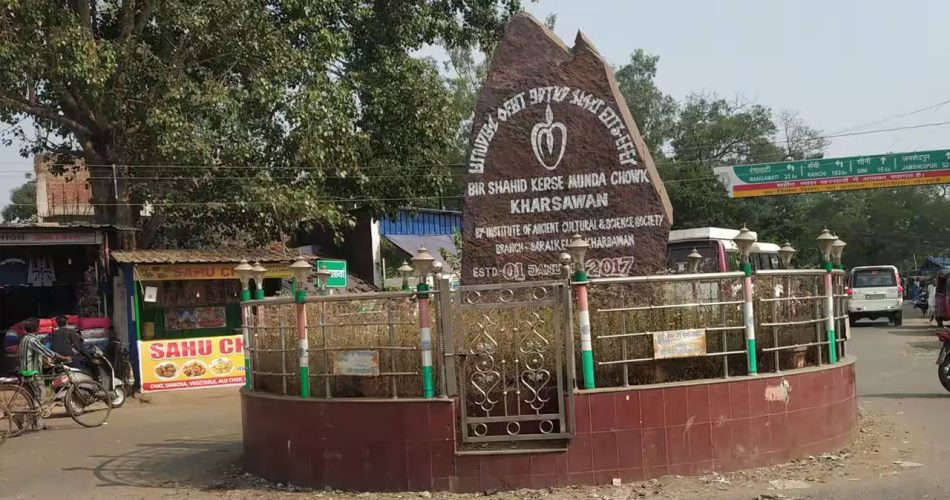
Saraikela-Kharsawan is a culturally rich district in southeastern Jharkhand, known for its world-famous Seraikella Chhau dance, royal heritage, forests, hills, rivers, dams, temples and growing industrial landscape. The district is part of the Kolhan region, with Saraikela serving as its administrative headquarters.
The district offers a unique combination of traditional culture, natural beauty, historical heritage and modern industrial development.
Geography
Saraikela-Kharsawan covers an area of approximately 2,724.55 square kilometres. The district is surrounded by green forests, hillocks, rivers and rivulets and lies in the southeastern part of Jharkhand.
It shares boundaries with East Singhbhum, West Singhbhum and Purulia district of West Bengal. The important rivers include the Kharkai and Subarnarekha (Swarnarekha).
The district has an elevation ranging approximately from 178 to 209 metres and features a diverse landscape of forests, hills, agricultural areas and river valleys.
History
The history of Saraikela is closely connected with the former princely states of Saraikela and Kharsawan.
The Saraikela state was established in 1620 by Kumar Bikram Singh I, the third Maharaja Jagannath Singh. Following India’s independence, the former princely territories underwent administrative changes before becoming part of Jharkhand.
Saraikela-Kharsawan was later carved out of the former West Singhbhum district and became one of the districts of Jharkhand.
The region’s royal history, temples, traditional arts and cultural traditions continue to influence its identity.
Population & Administration
According to Census 2011, Saraikela-Kharsawan had a population of approximately 10.65 lakh. The district administration currently lists:
- Area: 2,724.55 sq. km.
- Population: 10,65,056
- Subdivisions: 2
- Blocks: 9
- Panchayats: 132
- Villages: 1,148
- Municipalities: 3
- District Headquarters: Saraikela
Subdivisions
- Saraikela
- Chandil
Blocks
- Saraikela
- Kharsawan
- Gamharia
- Rajnagar
- Kuchai
- Chandil
- Ichagarh
- Nimdih
- Kukru
Culture & Heritage
Saraikela-Kharsawan is one of the most culturally significant districts of Jharkhand and is particularly famous as one of the origins of Chhau dance.
Seraikella Chhau
Seraikella Chhau is a renowned semi-classical dance tradition combining elements of martial arts, tribal traditions, folk culture and classical dance.
The distinctive masks, costumes, graceful movements and expressive storytelling of Seraikella Chhau have made it internationally recognized.
The dance is traditionally performed during festivals and cultural occasions and remains an important symbol of the region’s cultural identity.
Rath Yatra
The Jagannath Rath Yatra is an important festival celebrated in Saraikela. The centuries-old tradition attracts devotees and visitors and forms an important part of the district’s religious and cultural heritage.
Durga Puja
Durga Puja is another major festival celebrated with great enthusiasm throughout the district. Traditional celebrations, decorations and cultural activities bring communities together during the festival season.
Economy
Saraikela-Kharsawan has a mixed economy based on agriculture, industries, mining, trade and forest resources.
The district is home to the Adityapur Industrial Area, one of the major industrial areas of Jharkhand and one of the largest industrial clusters in Asia. Engineering, automobile-related industries and manufacturing contribute significantly to the regional economy.
The district also has mineral resources including kyanite, asbestos, quartz and limestone. Agriculture remains an important livelihood for rural communities.
Tourist Attractions in Saraikela-Kharsawan
Saraikela-Kharsawan offers a combination of dams, hills, forests, temples, rivers and cultural attractions, making it an interesting destination for weekend travellers and nature lovers.
1. Chandil Dam
Chandil Dam is one of the most popular tourist destinations in the district.
Built across the Subarnarekha River, the dam is surrounded by hills, forests and a large reservoir. Visitors can enjoy boating and scenic views around the reservoir.
A museum near the dam contains ancient rock inscriptions believed to be around 2,000 years old, adding historical significance to the destination.
Chandil is also being developed as a broader tourism destination under the Swadesh Darshan 2.0 initiative.
2. Dalma Top
Dalma Top is located in Chandil Block at an altitude of approximately 3,000 feet above sea level.
Surrounded by hills and forests, the location provides beautiful panoramic views and is an attractive destination for nature lovers, photographers and adventure enthusiasts.
3. Jayda Temple
Jayda Temple is an ancient temple dedicated to Lord Shiva, situated on the banks of the Subarnarekha River.
The temple is an important pilgrimage destination and is particularly popular during Makar Sankranti and the Tusu festival, when an annual fair is held in the area.
4. Saraikela
Saraikela town is the cultural heart of the district and is closely associated with the history of the former Saraikela princely state.
The town is particularly famous for Seraikella Chhau, traditional festivals and royal heritage.
Visitors interested in Jharkhand’s performing arts and cultural history can experience an important part of the state’s heritage here.
5. Kharsawan
Kharsawan is another historically important town of the district. It was formerly a princely state and has played an important role in the political and cultural history of the region.
The surrounding landscapes of forests and hills also make the area interesting for travellers exploring the less-visited parts of Jharkhand.
6. Chandil
Chandil is one of the district’s major tourism centres. Its combination of Chandil Dam, Subarnarekha River, hills and forests makes it a popular weekend destination.
Its location near Jamshedpur also makes it convenient for short trips and nature getaways.
Natural Beauty
Saraikela-Kharsawan is blessed with lush forests, hillocks, rivers, reservoirs and scenic countryside.
The Chandil region is particularly attractive because of its combination of the Subarnarekha River, Chandil Dam and surrounding hills. Dalma Top provides elevated views of the landscape, while the district’s forests offer opportunities for nature exploration and photography.
Transportation & Connectivity
Saraikela-Kharsawan has good road and railway connectivity with Jamshedpur, Ranchi, Chaibasa and neighbouring West Bengal.
The district administration identifies Sini Junction as the nearest railway station for Saraikela. Sini is approximately 37 km from Tatanagar Junction and provides convenient railway access to the region.
The nearest major airport is Birsa Munda International Airport, Ranchi. Kolkata Airport is another option for travellers approaching the district from the east.
Best Time to Visit Saraikela-Kharsawan
The October to February period is generally ideal for exploring Saraikela-Kharsawan, with pleasant weather suitable for sightseeing, photography and outdoor activities.
The monsoon season is also attractive for nature lovers, when the forests become lush green and the dams, rivers and surrounding landscapes become particularly scenic.
Why Visit Saraikela-Kharsawan?
Saraikela-Kharsawan is a destination where royal history, Chhau dance, tribal culture, nature, spirituality and industry come together.
From the scenic waters of Chandil Dam and the hilltop beauty of Dalma Top to the ancient Jayda Temple and the internationally recognized Seraikella Chhau, the district offers a diverse travel experience.
If you want to explore the cultural heritage and natural beauty of southeastern Jharkhand, Saraikela-Kharsawan is a destination worth discovering.