
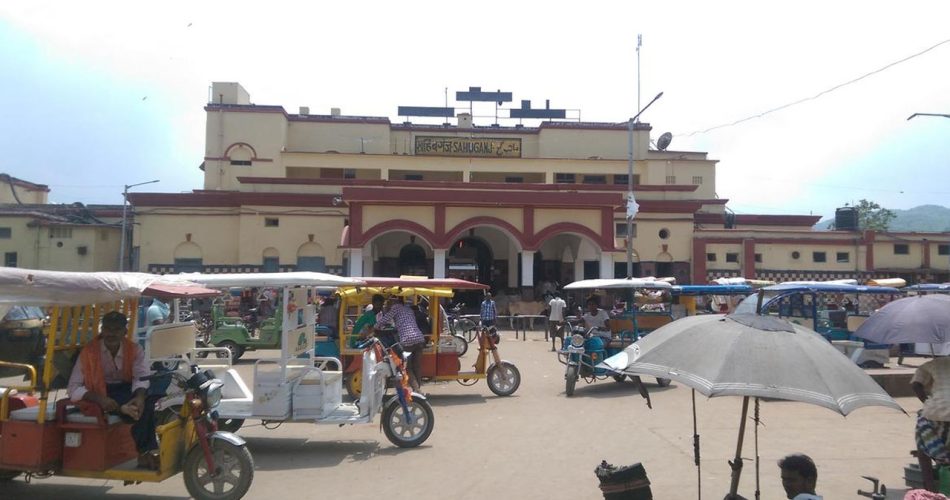
Sahibganj is a beautiful district in northeastern Jharkhand, situated along the Ganga River and surrounded by the historic Rajmahal Hills. Known for its rich tribal heritage, archaeological sites, rivers, hills, forests and religious attractions, Sahibganj offers a unique combination of history, nature and culture.
Sahibganj town serves as the district headquarters and is an important river port and transportation centre of northeastern Jharkhand.
Geography
Sahibganj district covers an area of approximately 2,069 square kilometres and is located in the northeastern part of Jharkhand.
The district is bordered by Godda and Pakur in the south, West Bengal in the east, and Bihar across the Ganga River in the north.
The Ganga River forms the northern boundary of the district, while the Rajmahal Hills dominate much of the southern landscape.
The district’s combination of river plains, hills, forests and agricultural land creates a distinctive natural environment.
History
Sahibganj has a fascinating history that stretches back several centuries. The Rajmahal Hills and surrounding areas have been associated with ancient settlements, medieval kingdoms and important events during the British period.
Rajmahal was once an important city during the Mughal period. In the 17th century, Rajmahal served as the capital of Bengal for a period under Shah Shuja, the son of Mughal Emperor Shah Jahan.
The region also played an important role during the Santhal Hul of 1855–56, one of the most significant tribal uprisings against British rule.
Sahibganj district was created on 28 January 1994, after being separated from the former Santhal Pargana district.
Population & Administration
According to Census 2011, Sahibganj district had a population of approximately 11.51 lakh.
The district is divided into three subdivisions:
- Sahibganj
- Rajmahal
- Barharwa
It has nine blocks:
- Sahibganj
- Mandro
- Borio
- Taljhari
- Rajmahal
- Udhwa
- Barharwa
- Pathna
- Barhait
Sahibganj town serves as the district headquarters.
Tribal Culture & Heritage
Sahibganj is an important centre of Santhal, Paharia and other tribal cultures.
Traditional festivals such as Sarhul, Sohrai, Karam and Tusu are celebrated across the district. Tribal music, dance, folk traditions and indigenous customs remain an important part of local cultural life.
The district’s hills and forests have traditionally supported the livelihoods and cultural practices of tribal communities.
Economy
Agriculture is one of the major economic activities in Sahibganj. Important crops include paddy, wheat, maize, pulses and vegetables.
Fishing, forestry, stone mining, trade and river-based activities also contribute to the local economy.
The district’s location along the Ganga makes river transportation and inland waterway activities particularly important.
Tourist Attractions in Sahibganj
Sahibganj is an excellent destination for travellers interested in history, hills, rivers, tribal culture, archaeology and religious heritage.
1. Rajmahal
Rajmahal is one of the most historically important places in Sahibganj district.
Located along the Ganga River and surrounded by the Rajmahal Hills, the town was once the capital of Bengal during the Mughal period.
Today, Rajmahal is known for its historical ruins, hills, temples and scenic river landscapes.
2. Rajmahal Hills
The Rajmahal Hills are among the most distinctive natural features of Sahibganj.
The hills are covered with forests and are home to several tribal communities. Their rugged landscape, greenery and panoramic views make them an important destination for nature lovers and photographers.
The hills are also geologically significant because of their ancient volcanic rock formations.
3. Udhwa Lake Bird Sanctuary
Udhwa Lake Bird Sanctuary is one of the most important wildlife attractions in Jharkhand.
It is the state’s only bird sanctuary and consists of two interconnected wetlands, Pataura and Berhale.
The sanctuary attracts a large number of migratory and resident birds, particularly during the winter months, making it an excellent destination for birdwatchers and nature lovers.
4. Teliagarhi Fort
Teliagarhi Fort is an important historical site located near Sahibganj.
The fort occupies a strategic position near the Rajmahal Hills and historically controlled an important route between Bengal and northern India.
The ruins provide visitors with an insight into the military and political history of the region.
5. Moti Jharna
Moti Jharna is a beautiful waterfall located in the Rajmahal area.
Surrounded by hills and greenery, the waterfall is particularly attractive during the monsoon season and is a popular destination for visitors looking for a peaceful natural retreat.
6. Bhognadih
Bhognadih is one of the most historically significant places in Sahibganj.
It is closely associated with the Santhal Hul of 1855, led by Sidhu and Kanhu Murmu against British rule and exploitation.
The village is an important destination for understanding the history and heritage of the Santhal community.
7. Kanhaia Sthan
Kanhaia Sthan is an important religious and historical destination near Rajmahal.
The site is associated with Lord Krishna and is believed to have connections with the Bhakti tradition. It attracts devotees and visitors interested in the religious heritage of the region.
8. Shivgadi
Shivgadi is a popular religious destination dedicated to Lord Shiva.
The temple is situated in a natural rocky and forested setting and attracts devotees, particularly during Shravan and Mahashivratri.
9. Panchkatia
Panchkatia is another historically significant location associated with the Santhal movement.
The place is connected with the early events of the Santhal Hul, making it an important destination for those interested in Jharkhand’s tribal history.
Natural Beauty
Sahibganj is blessed with a unique combination of the Ganga River, Rajmahal Hills, forests, wetlands and waterfalls.
The winter season is particularly attractive for birdwatching at Udhwa Lake, while the monsoon brings greenery and flowing water to the hills and waterfalls.
The river landscapes around Sahibganj and Rajmahal provide beautiful opportunities for photography and nature exploration.
Transportation & Connectivity
Sahibganj has excellent railway connectivity with major cities of eastern and northern India.
Sahibganj Railway Station is located on an important railway route connecting Jharkhand with West Bengal, Bihar and other parts of India.
The district is also connected by road to Pakur, Godda, Dumka and other nearby districts.
The Ganga River provides an additional mode of transportation, and Sahibganj is an important location along the National Waterway-1.
The nearest major airports include Deoghar Airport and Bagdogra Airport, depending on the travel route.
Best Time to Visit Sahibganj
The October to February period is one of the best times to visit Sahibganj. The weather is comfortable for sightseeing, while Udhwa Lake Bird Sanctuary attracts migratory birds during the winter.
The monsoon season is also attractive for visiting Moti Jharna and exploring the green landscapes of the Rajmahal Hills.
Why Visit Sahibganj?
Sahibganj is a destination where history, tribal heritage, rivers, hills, wildlife and spirituality come together. From the historic ruins of Rajmahal and Teliagarhi Fort to the birdlife of Udhwa Lake and the scenic Rajmahal Hills, the district offers a unique travel experience.
If you want to explore Jharkhand’s Ganga landscape, tribal history, ancient heritage and lesser-known natural destinations, Sahibganj is a place worth discovering.