
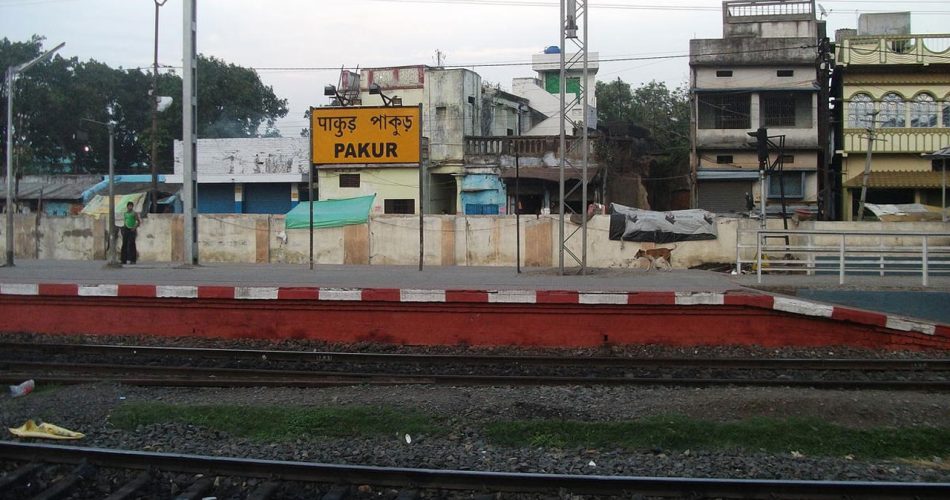
Pakur is a beautiful district in northeastern Jharkhand and an important part of the historic Santhal Pargana region. Known for its tribal heritage, green landscapes, hills, forests, stone industries and cultural traditions, Pakur offers a unique glimpse into the natural and cultural diversity of Jharkhand.
Pakur town serves as the district headquarters and is an important commercial centre of the region.
Geography
Pakur district is located in the northeastern part of Jharkhand. It shares its boundaries with Godda and Sahibganj in Jharkhand and Murshidabad and Birbhum districts of West Bengal.
The district covers an area of approximately 1,811 square kilometres and has a landscape consisting of hills, forests, agricultural land and river valleys.
The Ganga River lies to the north of the wider region, while the Bansloi River is one of the important rivers flowing through Pakur.
History
Pakur has a long historical connection with the Santhal Pargana region.
The district was created on 28 January 1994, after being separated from the former Sahibganj district. Before becoming a district, Pakur was an important subdivision of Sahibganj.
The region has also been associated with the Santhal Hul of 1855–56, one of the most significant tribal uprisings against British rule and exploitation.
Population & Administration
According to Census 2011, Pakur district had a population of approximately 9.00 lakh.
The district is divided into three subdivisions:
- Pakur
- Maheshpur
- Pakuria
Pakur has six blocks:
- Pakur
- Hiranpur
- Littipara
- Amrapara
- Maheshpur
- Pakuria
Pakur town is the administrative headquarters of the district.
Tribal Culture & Heritage
Pakur has a strong Santhal tribal cultural identity. Santhal communities form a significant part of the district’s population and have preserved their traditional lifestyle, folk music, dance, festivals and customs.
Important festivals include Sarhul, Sohrai, Karam and Tusu.
Traditional Santhal dance and music are an important part of local celebrations, while indigenous crafts and village traditions reflect the cultural heritage of the region.
Economy
Pakur is particularly famous for its stone mining and stone-crushing industry. The district has extensive deposits of high-quality black stone, which is supplied to different parts of eastern India.
Agriculture is another major economic activity. Important crops include paddy, wheat, maize, pulses and vegetables.
Forestry, livestock, small-scale industries and local trade also contribute to the district’s economy.
Tourist Attractions in Pakur
Pakur may not be one of Jharkhand’s most widely known tourist destinations, but it has several historical, religious and natural attractions worth exploring.
1. Pakur Raj Palace
The Pakur Raj Palace is one of the important historical landmarks of Pakur.
Associated with the former royal family of Pakur, the palace reflects the region’s historical heritage and the legacy of the Pakur Raj Estate.
2. Nityakali Mandir
Nityakali Mandir is one of the prominent religious attractions in Pakur town.
Dedicated to Goddess Kali, the temple attracts devotees throughout the year and becomes particularly vibrant during religious festivals.
3. Dharaghat
Dharaghat is a scenic location associated with the natural landscapes of Pakur. Surrounded by greenery and rural surroundings, it provides a peaceful environment for visitors interested in exploring the quieter side of the district.
4. Pakuria
Pakuria is one of the important areas of Pakur district and is surrounded by greenery, agricultural fields and rural landscapes.
The region provides visitors with an opportunity to experience traditional village life and the natural environment of the Santhal Pargana region.
5. Littipara Hills
The Littipara region is known for its hilly and forested landscape. The area is home to a significant tribal population and offers scenic views of the natural surroundings.
The hills and forests make the region particularly attractive for travellers interested in offbeat destinations and rural tourism.
6. Amrapara
Amrapara is another scenic part of Pakur district characterized by hills, forests and tribal villages.
The area provides opportunities to experience the traditional lifestyle and natural beauty of the Santhal Pargana region.
Natural Beauty
Pakur’s natural landscape is a combination of hills, forests, rivers, agricultural fields and rural villages.
The forested and hilly areas around Littipara and Amrapara offer beautiful landscapes, especially during the monsoon when the countryside becomes lush green.
For travellers interested in tribal culture and offbeat rural destinations, Pakur provides an authentic experience of northeastern Jharkhand.
Transportation & Connectivity
Pakur has good road and railway connectivity with Jharkhand and neighbouring West Bengal.
Pakur Railway Station is located on an important railway route connecting major cities of eastern India.
The district is connected by road to Sahibganj, Godda, Dumka, Malda and other nearby towns.
The nearest major airports are located at Deoghar, Durgapur and Kolkata, depending on the travel route.
Best Time to Visit Pakur
The October to February period is generally considered a pleasant time to explore Pakur, with cooler weather suitable for sightseeing and outdoor activities.
The monsoon season is also attractive for nature lovers, as the forests, hills and countryside become lush green.
Why Visit Pakur?
Pakur offers a fascinating combination of Santhal tribal culture, history, hills, forests and mineral heritage. From the historic Pakur Raj Palace and Nityakali Mandir to the scenic landscapes of Littipara and Amrapara, the district provides travellers with an opportunity to explore a lesser-known side of Jharkhand.
If you want to discover the tribal heartland and offbeat natural landscapes of Santhal Pargana, Pakur is a destination worth exploring.