
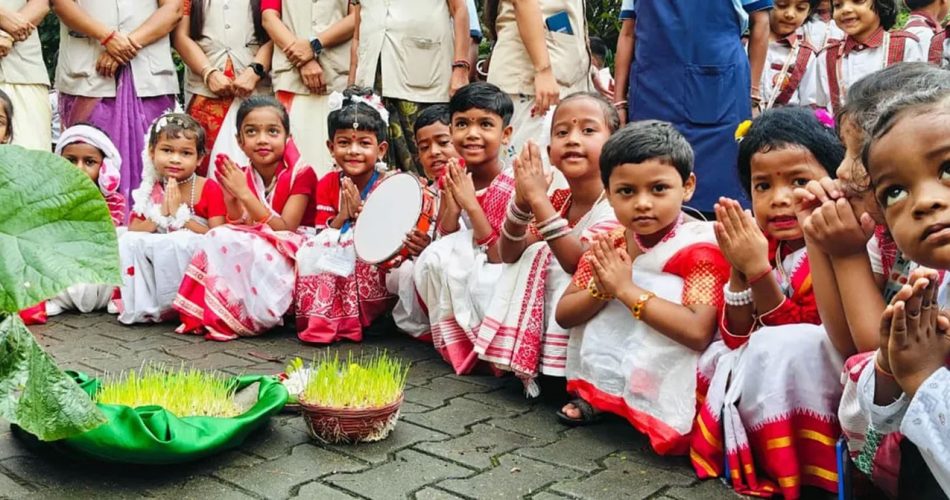
Karma Festival, also known as Karam Parab, is one of the most important traditional festivals celebrated across Jharkhand. The festival is deeply connected with tribal culture, nature, agriculture, prosperity and community life.
History & Significance
Karma Parab is traditionally celebrated by several tribal communities of Jharkhand, including Munda, Oraon, Ho and Santhal communities. The festival is associated with the worship of the Karam tree and the Karam deity, symbolizing prosperity, good fortune, fertility and well-being.
The festival also reflects the close relationship between Jharkhand’s tribal communities and nature.
When is Karma Festival Celebrated?
Karma Festival is generally celebrated on the 11th day of the bright fortnight of the Hindu month of Bhadrapada (Bhadra), usually falling in August or September.
The exact date changes every year according to the lunar calendar.
How is Karma Festival Celebrated?
The celebrations usually begin with young people collecting Karam branches from the forest. The branches are brought to the village and placed at a central location for worship.
People dress in traditional clothes, sing folk songs and perform Karma dance around the Karam branch. Traditional musical instruments such as Mandar, Nagara and Dhol create a lively atmosphere.
Women and young people often play an important role in the rituals and celebrations.
Karma Dance
Karma dance is one of the most recognizable parts of the festival. Men and women dance together in groups while singing traditional songs and accompanying the dance with drums and other folk instruments.
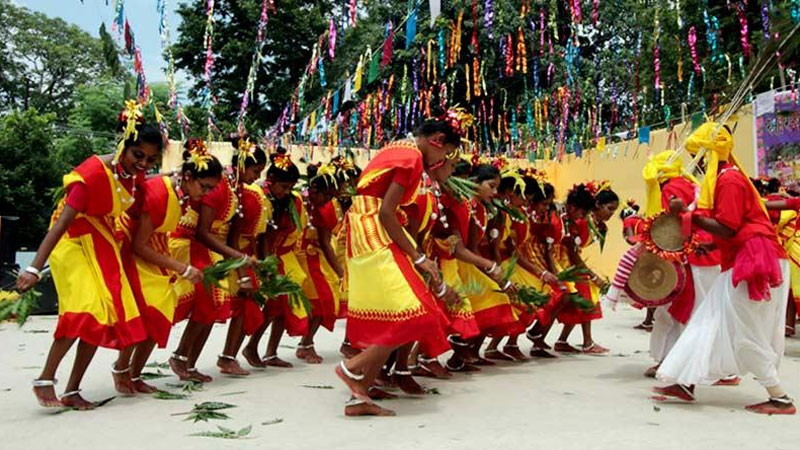
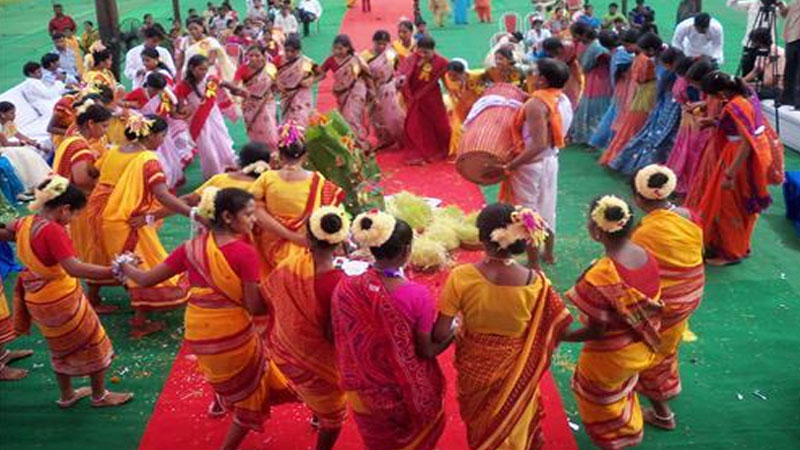
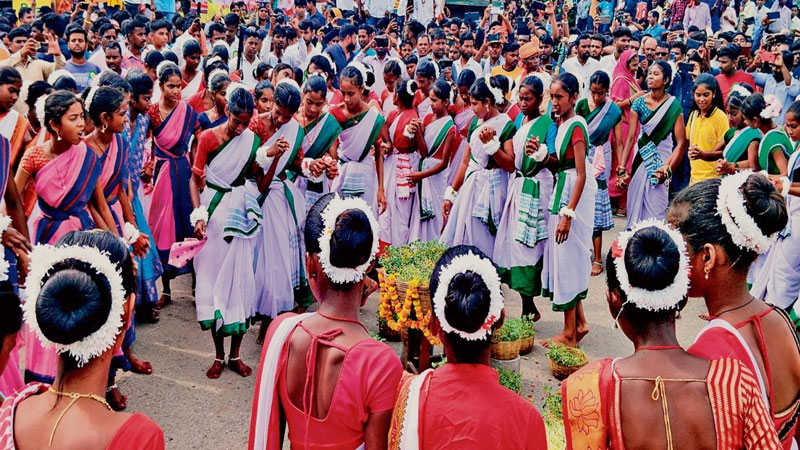
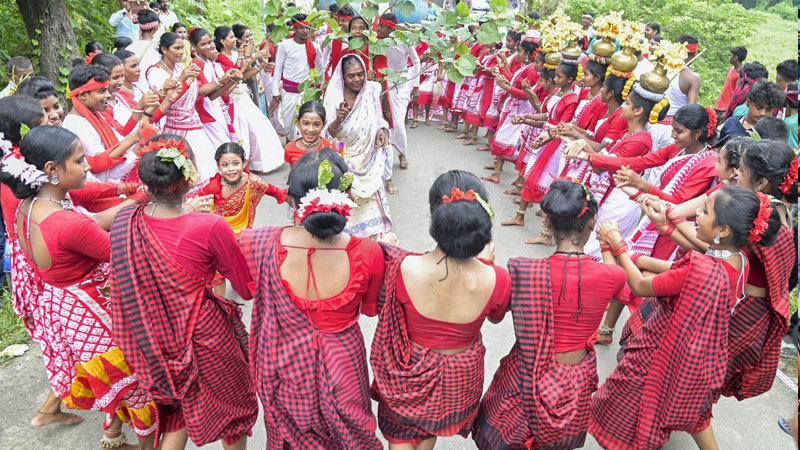
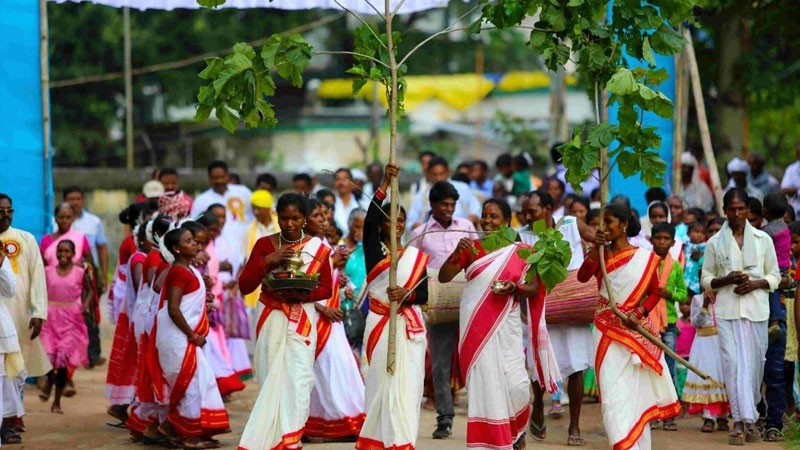
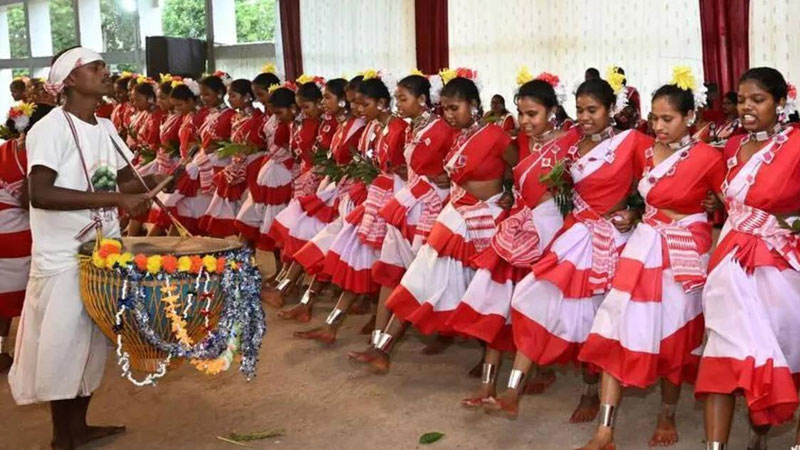
The rhythmic movements, colourful traditional clothing and energetic music create a vibrant celebration.
Traditional Food
Traditional foods prepared during Karma Festival vary between communities and regions. Local rice dishes, seasonal vegetables, fruits and other traditional preparations are commonly enjoyed during the celebrations.
The festival is also an occasion for families and communities to come together and share food.
Cultural Importance
Karma Festival represents:
- Respect for nature
- Community unity
- Agricultural prosperity
- Fertility and well-being
- Traditional tribal heritage
- Music and folk dance
- Connection with forests and the environment
Karma Festival in Jharkhand
Karma Parab is celebrated across many parts of Jharkhand, particularly in Ranchi, Khunti, Gumla, Simdega, Lohardaga, Latehar, West Singhbhum, East Singhbhum, Saraikela-Kharsawan and other tribal regions.
Villages and communities organize traditional gatherings where people participate in rituals, singing and dancing.
Why is Karma Festival Important?
Karma Festival is more than a religious celebration—it is a reflection of Jharkhand’s tribal identity and its deep connection with nature. The festival brings communities together while preserving traditional songs, dances, customs and beliefs for future generations.
Karma Parab beautifully showcases the living cultural heritage of Jharkhand.