
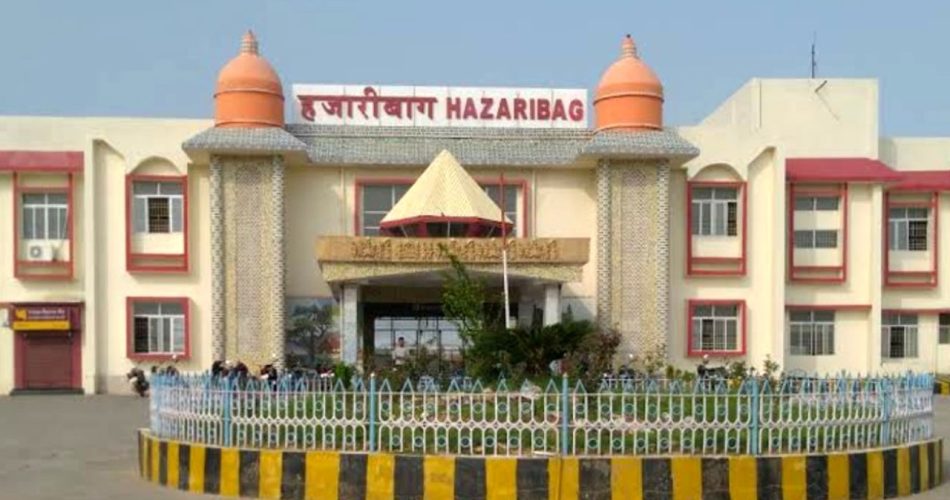
Hazaribagh is one of the most beautiful districts of Jharkhand, known for its green forests, hills, lakes, wildlife, pleasant climate and rich cultural heritage. Located in the North Chotanagpur Division, Hazaribagh is surrounded by natural landscapes and is often associated with the “Land of Thousand Gardens.” The district headquarters is Hazaribagh town.
Geography
Hazaribagh is situated in the northeastern part of the North Chotanagpur Division and forms part of the Chota Nagpur Plateau. The district covers an area of approximately 4,313 square kilometres and has a landscape of plateaus, mountains, valleys and forests.
The district is bordered by Gaya and Koderma in the north, Giridih and Bokaro in the east, Ramgarh in the south and Chatra in the west. The main rivers include the Damodar and Barakar. Around 45% of the district’s area is covered by forests.
History
Hazaribagh has a long and fascinating history associated with the wider Chota Nagpur region. The area has been inhabited by tribal communities for centuries and has played an important role in the history and cultural development of Jharkhand.
The district also played a role in India’s freedom movement. The Ramgarh Battalion revolt of 1857 and the Non-Cooperation Movement of 1920 are important chapters in the region’s history. Mahatma Gandhi visited Hazaribagh in 1925.
Several districts, including Koderma, Chatra, Ramgarh and Giridih, were subsequently carved out of the former Hazaribagh district.
Population & Administration
According to the latest district administration profile, Hazaribagh has a population of approximately 17.34 lakh and an area of 4,313 sq. km. Hindi is the major language spoken in the district. The district has around 1,324 villages.
Hazaribagh town serves as the administrative headquarters and is also an important educational and commercial centre of northern Jharkhand.
Culture & Heritage
Hazaribagh has a rich tribal and rural cultural heritage. Traditional festivals, folk traditions, music, dance and local art are an important part of the region’s identity.
The district is particularly famous for Sohrai and Khovar paintings, traditional forms of indigenous wall art associated with the tribal communities of the Hazaribagh region. These artworks are known for their distinctive natural motifs, animals, birds and geometric designs.
Economy
Agriculture, forestry, mining and local trade are important parts of Hazaribagh’s economy. The district is also naturally rich in minerals, with coal and mica being among its important mineral resources. China clay and limestone are also found in the region.
The extensive forest areas provide forest products and support traditional livelihoods, while Hazaribagh town serves as a major commercial and educational centre.
Tourist Attractions in Hazaribagh
Hazaribagh is an excellent destination for travellers interested in nature, wildlife, lakes, hills, photography and cultural heritage.
1. Hazaribagh Lake
Hazaribagh Lake is located in the heart of Hazaribagh town. It is a series of seven interconnected artificial lakes situated at different levels, with water flowing from one lake to another through spill channels.
Boating facilities are available, and the lake is particularly popular for its beautiful sunrise and sunset views. The location is also close to Swarna Jayanti Park and a cafeteria.
2. Canary Hill
Canary Hill is one of Hazaribagh’s most popular scenic attractions and is located approximately 3 km from Hazaribagh town.
The hill offers panoramic views of Hazaribagh and its surrounding landscape. Three lakes near the hill add to its scenic beauty, making Canary Hill a popular destination for photography, sightseeing and picnics.
3. Hazaribagh Wildlife Sanctuary
Hazaribagh Wildlife Sanctuary is one of the district’s major natural attractions. The sanctuary is surrounded by forests and hills and provides habitat for various species of wildlife.
The forest landscape is home to animals such as leopards, bears, jackals and foxes, while several migratory birds can also be seen in the region during winter.
4. Surajkund
Surajkund is a popular natural and religious attraction located in Barkatha block, around 72 km from Hazaribagh. The site is known for its natural hot water springs and religious significance.
The area includes several kunds, including Surya Kund, Lakshman Kund, Brahma Kund, Ram Kund and Sita Kund. A large fair is held here annually, attracting visitors from different areas.
5. Narsingh Sthan Temple
Narsingh Sthan Temple is an important religious attraction located in Khapariya village, approximately 6 km from Hazaribagh town on the Barkagaon Road.
The temple is dedicated to Lord Narasimha, an incarnation of Lord Vishnu. The complex also contains shrines dedicated to Shiva, Surya Dev, Maa Kali and Hanuman.
6. Rajderwah
Rajderwah is a scenic location situated within the forest area and is known for its peaceful surroundings and natural beauty. It is associated with the Hazaribagh wildlife landscape and is considered a good destination for nature lovers and picnickers.
7. Konar Dam
Konar Dam is another scenic attraction associated with the Hazaribagh region. Surrounded by hills and greenery, the reservoir provides beautiful views and is a popular destination for visitors looking for a peaceful natural setting.
Natural Beauty
Hazaribagh is blessed with a combination of forests, hills, valleys, lakes and rivers. The district’s approximately 45% forest cover provides a rich natural environment and supports diverse flora and fauna.
The Chandwara and Jillinja hills are among the prominent mountain features of the district. The surrounding forests are home to medicinal plants and a variety of wildlife.
Transportation & Connectivity
Hazaribagh is well connected by road with Ranchi and other major cities of Jharkhand. The district is approximately 93 km from Ranchi by road and is connected through major highways.
Hazaribagh also has railway connectivity, while Ranchi Airport is the nearest major airport for air travellers.
Best Time to Visit Hazaribagh
The winter months from October to February are generally considered a pleasant time to explore Hazaribagh. The weather is comfortable for sightseeing, wildlife exploration, photography and visiting the district’s lakes, hills and religious places.
The monsoon season is also attractive for nature lovers, as the forests become lush green and the surrounding landscapes become particularly scenic.
Why Visit Hazaribagh?
Hazaribagh is a destination where nature, wildlife, history, tribal culture and spirituality come together. From the scenic Canary Hill and Hazaribagh Lake to the forests of the wildlife sanctuary and the natural hot springs of Surajkund, the district offers a diverse travel experience.
If you are looking for a peaceful destination away from crowded tourist cities, Hazaribagh is one of the best places to explore the natural and cultural beauty of Jharkhand.