
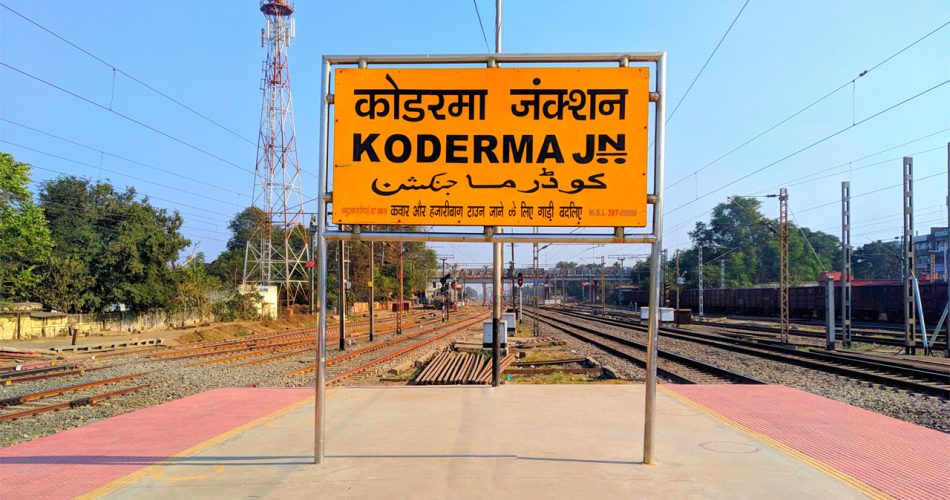
Koderma is a beautiful district in northern Jharkhand, known for its lush green hills, forests, waterfalls, dams, temples and rich mineral heritage. Popularly known as the “Mica City” or “Mica Capital of India,” Koderma is also regarded as the gateway to Jharkhand because of its strategic location and excellent road and railway connectivity.
Jhumri Tilaiya is the district’s main town, while Koderma serves as the administrative headquarters.
Geography
Koderma district covers an area of approximately 1,655.61 square kilometres and is located in the northern part of the North Chotanagpur Division of Jharkhand.
The district shares its boundaries with Nawada district of Bihar in the north, Hazaribagh in the south, Giridih in the east and Gaya district of Bihar in the west. The major rivers flowing through the district include the Barakar, Barsoi and Sakri.
Koderma is surrounded by hills and forests, giving the district a scenic landscape that attracts nature lovers and adventure enthusiasts.
History
Koderma was separated from Hazaribagh district and became an independent district on 10 April 1994. The region has historically been famous for its rich deposits of mica, particularly ruby mica.
For many years, Koderma was one of the world’s major mica-producing regions, and mica from the district was exported to several countries. The mica industry played an important role in the economic development of the region.
The district’s mineral heritage continues to be an important part of its identity.
Population & Administration
According to the 2011 Census, Koderma district had a population of 7,16,259, with a sex ratio of 950 females per 1,000 males.
The district has:
- Area: 1,655.61 sq. km.
- Population: 7,16,259
- Subdivisions: 1
- Blocks: 6
- Panchayats: 105
- Villages: 717
- District Headquarters: Koderma
The six blocks are Koderma, Jainagar, Chandwara, Markacho, Satgawan and Domchanch.
Culture & Heritage
Koderma reflects the cultural diversity of northern Jharkhand. Hindi and Khortha are among the major languages spoken in the district.
Traditional festivals, religious celebrations and rural customs form an important part of local life. The district also has several ancient temples and religious sites located among its hills and forests.
Economy
Agriculture, labour, industries and mineral resources are important parts of Koderma’s economy.
The district has historically been famous for mica mining, earning it the name “Mica City.” Other minerals found in the region include quartz, feldspar, blue stone, white stone, asbestos and moonstone.
Major crops include rice, wheat, maize and pulses, while forest products include mahua, jamun, jackfruit and kendu leaves.
Tourist Attractions in Koderma
Koderma offers a combination of dams, waterfalls, forests, hills, wildlife and religious destinations, making it an attractive offbeat destination in Jharkhand.
1. Tilaiya Dam
Tilaiya Dam is one of the most popular tourist attractions in Koderma. Built across the Barakar River, it was the first dam and hydroelectric power station constructed by the Damodar Valley Corporation.
The dam is approximately 1,200 feet long and 99 feet high, while its reservoir covers around 36 square kilometres. Surrounded by hills and greenery, the location is popular for sightseeing and boating.
2. Vrindaha Waterfalls
Vrindaha Waterfalls is a beautiful natural attraction located around 10 kilometres from Koderma district headquarters.
Surrounded by greenery and rocky landscapes, the waterfall provides a peaceful setting for nature lovers, photographers and visitors looking for an offbeat destination.
3. Petro Waterfalls
Located in the Mahawar Hills near Satgawan, Petro Waterfalls is one of Koderma’s scenic natural attractions.
The waterfall is situated around 70 kilometres from the district headquarters and is particularly attractive during the monsoon season. Its forested surroundings make it an interesting destination for nature and adventure lovers.
4. Koderma Wildlife Sanctuary
The Koderma Wildlife Sanctuary is an important natural attraction in the district. Spread over approximately 150.62 square kilometres, the sanctuary is surrounded by forested hills and connects with forest areas towards Gaya in Bihar.
The sanctuary provides opportunities for nature exploration and wildlife observation.
5. Dhwajadhari Hill
Dhwajadhari Hill is a scenic and religious destination located around 9 kilometres from Koderma Railway Station.
The hill is associated with religious traditions and offers visitors a combination of spirituality, greenery and panoramic natural surroundings.
6. Maa Chanchala Devi Mandir
Located along the Koderma-Giridih Highway, Maa Chanchala Devi Mandir is situated on a hill approximately 400 feet high in Markacho block.
The temple is an important religious destination and attracts devotees throughout the year.
7. Ghodsimar Dham
Ghodsimar Dham is a religious destination located around 70 kilometres from Koderma district headquarters, along the banks of the Sakri River.
Its riverside setting and spiritual significance make it an interesting place to visit while exploring the district.
8. Panchkhero Dam
Panchkhero Dam is a picturesque destination surrounded by natural landscapes. The calm reservoir attracts visitors, particularly families and nature lovers, and is known for boating and peaceful surroundings.
9. Puto Dham
Puto Dham, also known as Mahadev Dham, is a religious destination in Puto village of Chandwara block. The site is dedicated to Lord Shiva and is visited by devotees from nearby areas.
10. Radha Krishna Mandir
The Radha Krishna Mandir is a religious attraction in Koderma known for its peaceful surroundings. The temple provides visitors with a combination of spiritual experience and natural beauty.
Jhumri Tilaiya
Jhumri Tilaiya is one of the most recognizable names associated with Koderma. The town became particularly famous across India for its enthusiastic radio listeners and radio-song dedication culture.
Today, Jhumri Tilaiya remains an important commercial and cultural centre of the district.
Natural Beauty
Koderma is often described as a sylvan valley, surrounded by green hills and forests. Waterfalls, reservoirs, rocky hills and forest landscapes make the district especially attractive during the monsoon.
The combination of Tilaiya Dam, Vrindaha Waterfalls, Petro Waterfalls, Koderma Wildlife Sanctuary and forested hills offers opportunities for nature walks, trekking, photography and outdoor exploration.
Transportation & Connectivity
Koderma has excellent road and railway connectivity with major cities of eastern and northern India.
Koderma Railway Station is an important railway station and is connected to cities including Patna, Ranchi, New Delhi, Mumbai, Kolkata and other major destinations.
Koderma is approximately 165 kilometres from Ranchi. The district is also well connected by road, making it accessible from Jharkhand and neighbouring Bihar.
Best Time to Visit Koderma
The monsoon and winter seasons are among the best times to explore Koderma. During the monsoon, waterfalls become more spectacular and the forests turn lush green.
From October to February, pleasant weather makes it comfortable to explore dams, temples, hills, waterfalls and other attractions.
Why Visit Koderma?
Koderma is a destination where mineral heritage, nature, spirituality and adventure come together. From the scenic waters of Tilaiya Dam and the beauty of Vrindaha Waterfalls to the forests of Koderma Wildlife Sanctuary and the religious significance of Dhwajadhari Hill, the district has something for every traveller.
If you want to explore a lesser-known destination of Jharkhand filled with hills, forests, waterfalls, dams and cultural heritage, Koderma is definitely worth discovering.