
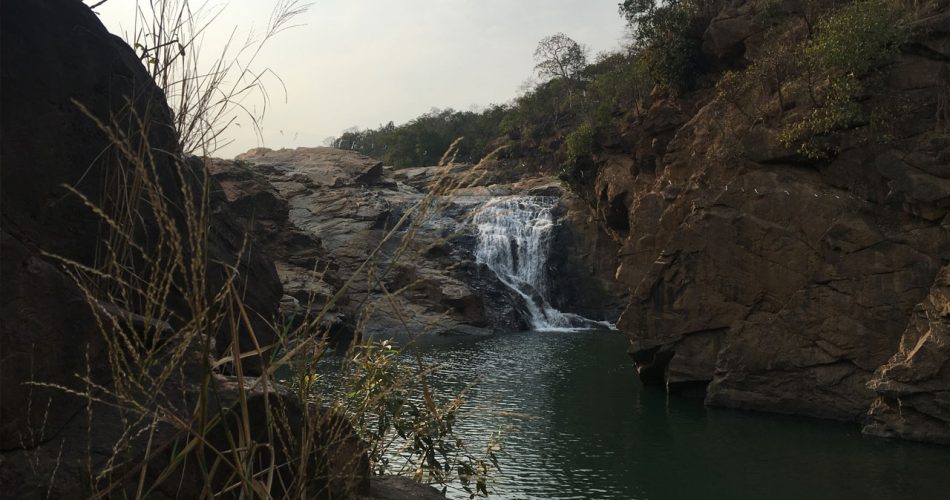
Khunti is a beautiful district in southern Jharkhand, known for its tribal heritage, forests, hills, waterfalls and rich history. The district is closely associated with Birsa Munda, one of the most important tribal freedom fighters of India. Khunti town serves as the district headquarters and is an important cultural centre of the Munda community.
Geography
Khunti district is located in the southern part of Jharkhand and forms part of the South Chotanagpur Division. It covers an area of approximately 2,535 square kilometres.
The district is characterized by forests, hills, valleys, rivers and agricultural land. It shares boundaries with Ranchi, Gumla, Simdega, West Singhbhum and Saraikela-Kharsawan.
The South Koel River and its tributaries flow through different parts of the district, contributing to its scenic landscapes and natural beauty.
History
Khunti has a deep connection with the history of the Munda tribal community and the tribal movement of Jharkhand.
The region is particularly famous as the birthplace and homeland of Birsa Munda, who led the Munda Ulgulan (Great Tribal Revolt) against British rule and the exploitation of tribal communities in the late 19th century.
Khunti became a separate district on 12 September 2007, after being carved out of Ranchi district.
The district continues to preserve the historical and cultural legacy associated with Birsa Munda and the Munda community.
Population & Administration
According to Census 2011, Khunti district had a population of approximately 5.31 lakh.
The district is divided into six blocks:
- Khunti
- Murhu
- Torpa
- Karra
- Rania
- Arki
Khunti town is the administrative headquarters of the district.
Tribal Culture & Heritage
Khunti is one of the most important centres of Munda tribal culture in Jharkhand. Tribal traditions, folk music, dance, festivals and indigenous customs form an important part of everyday life.
Major traditional festivals include Sarhul, Karam, Sohrai and Mage Parab.
The district’s connection with Birsa Munda makes it especially significant in the history of Jharkhand’s tribal identity and freedom movement.
Economy
Agriculture and forestry are the main components of Khunti’s rural economy. A large part of the population depends on farming, livestock and forest-based activities.
Major crops include paddy, maize, pulses and vegetables. Forest products such as mahua, tamarind, lac and other minor forest produce also contribute to rural livelihoods.
The district’s natural resources and fertile valleys provide favourable conditions for agriculture and horticulture.
Tourist Attractions in Khunti
Khunti is an excellent destination for travellers interested in waterfalls, forests, hills, tribal culture and offbeat tourism.
1. Panchghagh Falls
Panchghagh Falls is one of the most popular tourist attractions in Khunti district.
The waterfall is formed where the Banai River divides into five separate streams, creating a spectacular natural landscape. Surrounded by dense greenery and rocky terrain, Panchghagh is particularly beautiful during and after the monsoon.
It is a popular picnic and weekend destination for visitors from Ranchi and surrounding areas.
2. Rani Falls
Rani Falls is another beautiful waterfall in Khunti district. Located amid forests and hills, the waterfall offers a peaceful natural environment away from busy urban areas.
The surrounding greenery makes it an attractive destination for nature lovers, photographers and adventure enthusiasts.
3. Perwaghagh Falls
Perwaghagh Falls is a scenic waterfall located in the Torpa area of Khunti. The waterfall flows through a rocky landscape surrounded by forests and greenery.
The natural setting and relatively peaceful surroundings make it an ideal destination for travellers looking for an offbeat waterfall experience.
4. Ulihatu
Ulihatu is the birthplace of Birsa Munda and one of the most historically significant places in Khunti.
Located in the Ulihatu village area, the place is closely associated with Birsa Munda’s childhood and legacy. A memorial dedicated to him attracts visitors interested in the history of Jharkhand’s tribal freedom movement.
5. Birsa Munda’s Birthplace
The birthplace of Birsa Munda is an important historical destination for understanding the life and legacy of the tribal leader.
Birsa Munda’s contribution to the tribal movement and his struggle against British rule made him an enduring symbol of tribal resistance and identity.
6. Amreshwar Dham
Amreshwar Dham is one of the prominent religious destinations near Khunti. Dedicated to Lord Shiva, the temple is surrounded by greenery and natural landscapes.
The temple attracts devotees throughout the year and becomes particularly busy during Shravan and Mahashivratri.
7. Angrabari
Angrabari is another important religious destination in Khunti and is associated with the Amreshwar Dham temple complex.
The peaceful surroundings and forested landscape make the area attractive for both pilgrims and nature lovers.
Natural Beauty
Khunti is blessed with dense forests, rocky hills, rivers and numerous waterfalls. The district’s natural landscapes become particularly spectacular during the monsoon, when waterfalls are full of water and the surrounding forests turn lush green.
Panchghagh, Perwaghagh and Rani Falls are among the destinations that showcase the district’s natural beauty.
The combination of waterfalls and tribal heritage makes Khunti one of the most interesting offbeat destinations in Jharkhand.
Transportation & Connectivity
Khunti is located approximately 40–45 km from Ranchi and is well connected by road.
Ranchi is the nearest major city and provides railway and air connectivity. Birsa Munda Airport, Ranchi, is the nearest major airport for travellers visiting Khunti.
Regular road transport connects Khunti with Ranchi and nearby districts.
Best Time to Visit Khunti
The monsoon season from July to September is an excellent time to experience Khunti’s waterfalls and lush green landscapes.
For comfortable sightseeing and exploring historical and religious attractions, October to February is generally considered a pleasant period.
Visitors should exercise caution around waterfalls during heavy rainfall and follow local safety guidelines.
Why Visit Khunti?
Khunti is a destination where tribal history, nature, waterfalls and spirituality come together. From the birthplace of Birsa Munda at Ulihatu to the cascading streams of Panchghagh Falls and the peaceful surroundings of Amreshwar Dham, the district offers a unique travel experience.
If you want to explore the tribal heartland of Jharkhand, discover beautiful waterfalls and experience places connected with the legacy of Birsa Munda, Khunti is a destination worth visiting.