
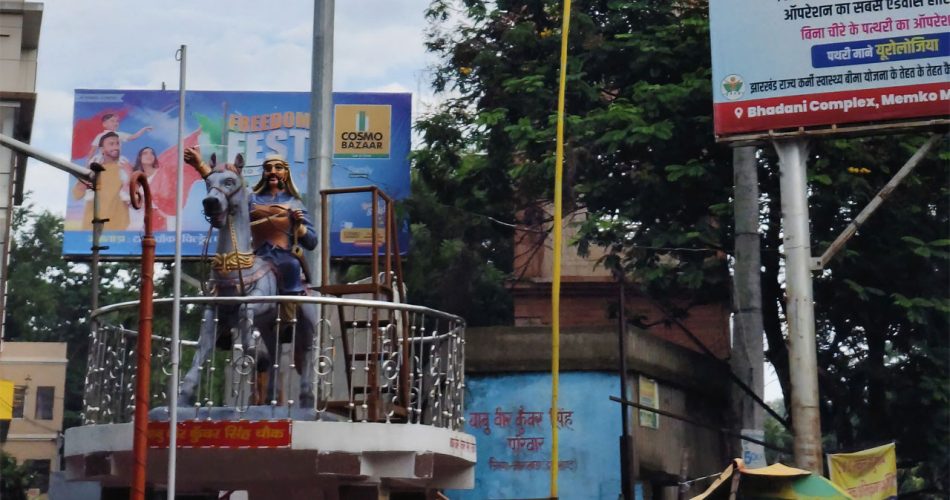
Jamtara is a district in northeastern Jharkhand and forms part of the Santhal Pargana Division. Known for its tribal heritage, green landscapes, hills, forests, rivers and rural beauty, Jamtara offers an interesting combination of nature, culture and history. Jamtara town serves as the district headquarters.
Geography
Jamtara district covers an area of approximately 1,801 square kilometres. It is located in the northeastern part of Jharkhand and shares boundaries with Deoghar, Dumka, Dhanbad and West Bengal.
The district has a landscape of rolling hills, forests, agricultural fields and rivers. The Ajay River is one of the major rivers flowing through the region and plays an important role in the local landscape and agriculture.
History
Jamtara was historically part of the wider Santhal Pargana region. It became a separate district on 26 April 2001, after being carved out of the former Dumka district.
The region has a strong connection with the history and cultural traditions of the Santhal Pargana. Tribal communities, traditional customs and folk traditions continue to influence the social and cultural identity of Jamtara.
Population & Administration
According to Census 2011, Jamtara district had a population of approximately 7.91 lakh.
The district is divided into two subdivisions:
- Jamtara
- Mihijam
Jamtara has six community development blocks:
- Jamtara
- Narayanpur
- Nala
- Kundahit
- Karmatar
- Fatehpur
Jamtara town is the administrative headquarters of the district.
Culture & Traditions
Jamtara has a rich cultural heritage influenced by the tribal communities of the Santhal Pargana region. Santhals and other tribal communities have preserved traditional music, dance, festivals, customs and folk practices.
Festivals such as Sarhul, Karam, Sohrai and Tusu are celebrated with traditional enthusiasm in different parts of the district.
The rural landscape and traditional village life provide visitors with an opportunity to experience an authentic side of Jharkhand’s cultural heritage.
Economy
Agriculture is one of the main economic activities in Jamtara. A large part of the rural population depends on farming and allied activities.
Major crops include paddy, maize, wheat, pulses and vegetables. Forestry, livestock, small-scale businesses and local trade also contribute to the district’s economy.
The district’s proximity to Dhanbad and West Bengal has also contributed to the development of trade and transportation-related activities.
Tourist Attractions in Jamtara
Jamtara may not be among Jharkhand’s most crowded tourist destinations, but it has several scenic and religious places that are worth exploring.
1. Mihijam
Mihijam is one of the important towns of Jamtara district and is located close to the West Bengal border. Surrounded by greenery and rolling landscapes, the town is known for its peaceful environment.
Its location makes it an interesting stop for travellers exploring Jamtara and neighbouring areas.
2. Karmatar
Karmatar is historically associated with Ishwar Chandra Vidyasagar, one of India’s renowned social reformers and educators.
Vidyasagar spent an important period of his life in Karmatar, where he worked for social and educational development. The place therefore holds special significance for visitors interested in history and social reform.
3. Vidyasagar Memorial
The Vidyasagar Memorial at Karmatar commemorates the life and work of Ishwar Chandra Vidyasagar.
The memorial and surrounding area attract visitors interested in learning about his contribution to education, women’s empowerment and social reform.
4. Nala
Nala is one of the important blocks of Jamtara district and is known for its rural landscapes, agricultural fields and traditional village culture.
The surrounding areas provide opportunities to explore the quieter and less-developed side of Jharkhand.
5. Ajay River
The Ajay River is an important natural feature of Jamtara. The river and its surrounding landscapes provide scenic views, particularly during the monsoon and winter seasons.
The riverside areas can be attractive for photography and peaceful nature visits.
Natural Beauty
Jamtara’s natural beauty comes from its combination of hills, forests, agricultural fields, rivers and rural landscapes.
The greenery becomes particularly attractive during the monsoon season, while winter offers comfortable weather for exploring the countryside and nearby attractions.
For travellers interested in offbeat destinations, Jamtara provides an opportunity to experience the natural and cultural side of northeastern Jharkhand away from heavily visited tourist locations.
Transportation & Connectivity
Jamtara has good road and railway connectivity with important cities of Jharkhand and neighbouring West Bengal.
Jamtara Railway Station lies on an important railway route connecting major cities in eastern India. Nearby railway stations such as Chittaranjan also provide connectivity to the region.
Road connections link Jamtara with Dhanbad, Deoghar, Dumka, Asansol and other nearby towns.
Best Time to Visit Jamtara
The October to February period is generally suitable for exploring Jamtara because of the pleasant weather.
The monsoon season can also be attractive for nature lovers, when the countryside becomes lush green and the rivers and natural landscapes are at their most scenic.
Why Visit Jamtara?
Jamtara offers a quieter and less-explored experience of Jharkhand. Its tribal heritage, rural landscapes, Ajay River, historical connection with Ishwar Chandra Vidyasagar and peaceful surroundings make it an interesting destination for travellers looking beyond the state’s popular tourist spots.
Whether you are interested in history, culture, nature or offbeat travel, Jamtara is a destination worth discovering in Jharkhand.