
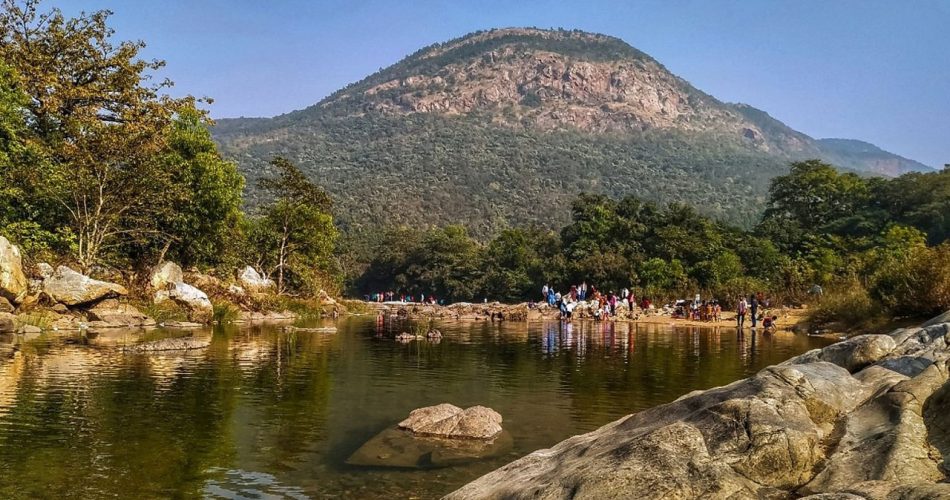
West Singhbhum is the largest district of Jharkhand by area, located in the southern part of the state. Headquartered at Chaibasa, the district is known for its vast forests, rolling hills, rivers, waterfalls, rich tribal heritage and mineral resources. The famous Saranda Forest, one of the largest Sal forest regions in Asia, is one of the major natural attractions of West Singhbhum.
Geography
West Singhbhum covers an area of approximately 5,291 square kilometres. The district is characterized by hills, valleys, steep mountains and dense forests. It shares its northern boundary with Khunti, eastern boundary with Saraikela-Kharsawan, southern boundary with Odisha, and western boundary with Simdega and Odisha.
Important rivers flowing through the district include the Koel, Karo-Koina, Sanjai, Roro, Deo and Baitarani rivers. The diverse landscape of forests, hills and rivers gives West Singhbhum its distinctive natural beauty.
History
West Singhbhum has a long and fascinating history. After the British conquest of Kolhan in 1837, Singhbhum was constituted as a district with Chaibasa as its headquarters. In 1990, the old Singhbhum district was divided, resulting in the creation of East Singhbhum and West Singhbhum. In 2001, Saraikela-Kharsawan was separated from West Singhbhum.
The name Singhbhum is associated with the historic Singh rulers of Porahat, while another interpretation connects it with Singh Bonga, an important deity in the tribal traditions of the region.
Population & Administration
According to the district administration’s current profile, West Singhbhum has a population of approximately 15.02 lakh and an area of about 5,291.02 sq. km. Ho, Santali and Hindi are among the major languages spoken in the district.
The district currently has:
- 3 Subdivisions
- 18 Blocks
- 2 Municipalities
- 1,691 Villages
- District Headquarters: Chaibasa
Subdivisions
- Sadar Chaibasa
- Porahat Chakradharpur
- Jagannathpur
The 18 blocks include Chaibasa, Khuntpani, Jhinkpani, Tonto, Manjhari, Tantnagar, Hatgamharia, Chakradharpur, Bandgaon, Sonua, Goilkera, Manoharpur, Anandpur, Gudri, Jagannathpur, Noamundi, Majhgaon and Kumardungi.
Tribal Culture & Heritage
West Singhbhum has a strong tribal identity, with the Ho community forming an important part of the district’s social and cultural landscape. Traditional festivals, folk music, dance, customs and community traditions continue to play an important role in rural life.
The district’s forests and natural environment are also closely connected with traditional tribal livelihoods and cultural practices.
Economy
West Singhbhum has an important mining and mineral-based economy. Areas such as Noamundi are well known for iron ore resources, while the district’s forests provide valuable natural resources.
Agriculture, forestry, mining, local trade and related industries are important contributors to the district’s economy.
Tourism & Tourist Attractions
West Singhbhum is one of the most interesting destinations in Jharkhand for travellers who enjoy forests, waterfalls, hills, wildlife, tribal culture and offbeat locations.
1. Saranda Forest
Saranda Forest is one of the most famous natural attractions of West Singhbhum. The name Saranda is associated with the “seven hundred hills,” and the region is renowned for its extensive Sal forests.
The forest landscape is home to elephants and other wildlife and is considered one of the most beautiful forest regions of Jharkhand.
2. Tholkobad
Tholkobad is a scenic forest destination situated at an elevation of approximately 1,800 feet. Surrounded by dense forests, the area is particularly known for the “Saranda Queen,” an exceptionally large and old Sal tree.
The peaceful surroundings and forest landscapes make Tholkobad an attractive destination for nature lovers and photographers.
3. Hirni Waterfall
Hirni Waterfall is located about 40 km north of Chakradharpur on the Ranchi-Chaibasa road. The waterfall is surrounded by dense forest and is a popular picnic and nature destination.
4. Ramtirtha
Ramtirtha is located in Jagannathpur block and is known for a Shiva temple and a waterfall on the Baitarani River. An annual fair is held here during Makar Sankranti. Local tradition associates the place with Lord Ram crossing the Baitarani River.
5. Lupungutu
Lupungutu is a small village located just a few kilometres from Chaibasa. It is known for its perennial natural spring, which has traditionally been a popular picnic spot.
6. Mahadebsal
Mahadebsal, located near Goilkera, is home to an important Lord Mahadev temple. A large fair is organized here during Shivratri, attracting devotees and visitors from surrounding areas.
7. Bidri
Bidri village in Manjhari block is surrounded by scenic landscapes. A small lake and hillock provide beautiful views, while the Thakora Waterfall is located around 6 km away.
8. Benisagar
Benisagar is situated near the West Singhbhum-Odisha border and is known for its archaeological remains. The site is named after King Beni and is of historical interest to visitors exploring the region’s ancient heritage.
9. Jagannathpur
Jagannathpur is an important historic village and the headquarters of the Jagannathpur block. It derives its name from Raja Jagannath Singh of Porahat and has an old Shiva temple.
10. Shahid Park, Chaibasa
Shahid Park is a recently developed park in West Singhbhum, administered by the Government of Jharkhand. It provides a recreational space where visitors can relax and enjoy the surrounding environment.
Natural Beauty
The biggest attraction of West Singhbhum is its combination of dense forests, hills, waterfalls and rivers. The Saranda landscape, Hirni Waterfall, Tholkobad, Ramtirtha and numerous lesser-known forest destinations offer excellent opportunities for nature exploration and photography.
The district’s forest ecosystem also supports diverse wildlife, including elephants, bison, deer, wild boar and other species.
Best Time to Visit West Singhbhum
The monsoon and winter seasons are particularly attractive for exploring the district’s waterfalls, forests and green landscapes. Winter generally offers comfortable conditions for sightseeing and outdoor activities.
Visitors exploring forest areas should follow local guidelines and respect wildlife and the natural environment.
Why Visit West Singhbhum?
West Singhbhum is a destination for travellers looking to discover the wild, scenic and culturally rich side of Jharkhand. From the vast Sal forests of Saranda and the scenic beauty of Tholkobad to Hirni Waterfall, Ramtirtha and the tribal heritage of the Kolhan region, the district offers a unique travel experience.
If you love forests, waterfalls, wildlife, tribal culture, photography and offbeat destinations, West Singhbhum is a place worth exploring.